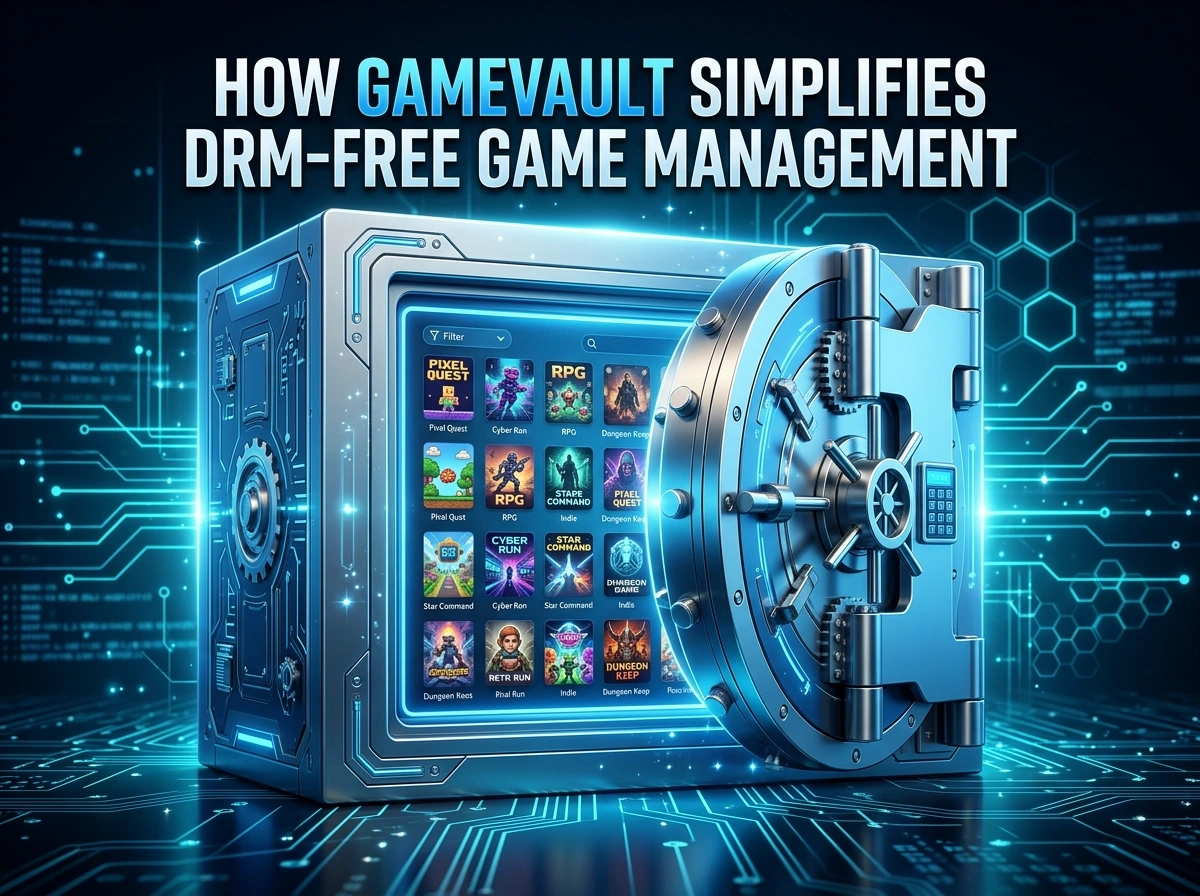
GameVault is a free, self-hosted software platform that allows PC gamers to centrally organize, track, and distribute their DRM-free game files. By functioning like a private cloud server, GameVault automatically adds cover art, tracks playtime, and lets users share access with friends securely without relying on third-party digital storefronts.
Modern PC gamers face a significant hurdle when buying digital games across multiple storefronts. Purchasing titles from platforms like GOG or Humble Bundle often leaves consumers with scattered folders of DRM-free executable files. Organizing these files manually takes hours of effort and requires constant folder maintenance across different hard drives, external drives, and network locations. Without a centralized system, gamers spend more time managing their storage directories than actually playing their newly acquired titles.
Digital ownership also requires robust backup strategies and meticulous organization. When gamers purchase DRM-free titles, they secure the actual game files rather than just a revocable license to play them. However, storing dozens of large installation files on a standard desktop computer quickly becomes chaotic, leading to misplaced games or forgotten purchases hidden deep within nested folders. This fragmented approach heavily contrasts with the streamlined, highly visual experience provided by massive corporate storefronts.
GameVault offers a dedicated solution to this digital storage and organization problem. This self-hosted platform transforms a chaotic folder of loose game installers into a polished, easily accessible library. Gamers can finally manage their independent digital collections with the same visual fidelity, automatic updates, and playtime tracking features provided by mainstream storefronts, all while retaining absolute control over their local data.
What Exactly Is the GameVault Gaming Platform?
GameVault operates as a self-hosted gaming platform specifically engineered for DRM-free game files. Unlike third-party library aggregators that merely create desktop shortcuts pointing to existing Steam, Epic Games, or EA Play installations, GameVault requires users to provide their own legally owned game files. The software then acts as a personal digital server, securely distributing these raw files to the user’s connected gaming devices.
The platform consists of two main technical components: a backend server that houses the raw game files, and a frontend client application that users install on their gaming PCs to browse and download titles. GameVault officially launched its client on the Microsoft Store in July 2023, offering a native Windows application alongside a highly responsive web interface.
The core GameVault software ecosystem is completely free to use. The platform operates on a source-available model, meaning developers and technical enthusiasts can transparently review the underlying code on GitHub. For users who want to financially support the platform’s ongoing development, the creators offer an optional premium subscription called GameVault+. This tier provides supporters with advanced server configurations and expanded customization options.
How Does GameVault Centralize Your DRM-Free Game Library?
Managing raw installation files typically involves navigating complex folder hierarchies, extracting compressed archives, and executing manual setup processes. GameVault eliminates this friction by creating a localized, personal game cloud. Gamers upload their DRM-free folders and files to their private GameVault server once. After this initial upload process, the GameVault client interface displays the entire library visually, allowing users to download and launch their games with a single click.
This centralized approach protects digital collections from unforeseen hardware failures and local storage limitations on primary gaming PCs. By hosting the GameVault server on a dedicated NAS (Network Attached Storage) device, a home lab server, or a secondary computer, players free up valuable solid-state drive space on their main gaming rigs.
Whenever a user decides they want to play a specific title, they simply download the necessary files directly from their own GameVault server. Because this transfer occurs over a local network, games download at maximum gigabit speeds, completely bypassing the bandwidth limitations of traditional internet service providers.
What Are the Core Features of GameVault for Gamers?
The GameVault platform incorporates several advanced technical features designed to replicate a premium digital storefront experience without forcing users to rely on external corporate infrastructure.
How Does GameVault Handle Metadata Enrichment?
One of the most tedious aspects of self-hosting media servers is manually gathering cover art, release dates, and text descriptions for every file. GameVault solves this problem by automatically fetching high-quality metadata for every newly uploaded title.
The backend software intelligently identifies the raw game files and instantly populates the user interface with official cover art, detailed game descriptions, genre tags, and developer information. This automated enrichment process ensures the digital collection remains highly professional and visually stunning, completely removing the need for manual data entry.
How Can Users Leverage Multi-User and Social Capabilities?
GameVault transforms basic single-player game storage into a shared community experience. The primary server administrator can easily create individual user accounts for trusted friends and family members.
This multi-user system allows authorized individuals to securely access the shared library, download games to their respective local machines, and observe what other community members are currently playing in real-time. The server owner maintains total administrative control over user permissions, access rights, and security settings at all times, ensuring the private server remains completely secure.
How Does the Platform Track Playtime and Progress?
Mainstream storefronts condition modern gamers to expect detailed analytics regarding their gaming habits. GameVault delivers this specific functionality by tracking playtime statistics natively within the client application.
Players can monitor their total hours spent inside specific titles, manage their unplayed game backlogs efficiently, and review their gaming progress over an extended timeline. Because GameVault is self-hosted, all of these behavioral statistics remain securely stored on the private server, guaranteeing complete data privacy away from corporate data brokers.
Why Should Casual and Hardcore Gamers Choose GameVault?
Different types of PC gamers extract unique value from self-hosted software solutions. GameVault successfully accommodates varying technical skill levels and gaming preferences through its highly versatile design architecture.
Choose GameVault as a casual gamer if a streamlined visual interface matters more than manual folder configuration. Casual players benefit immensely from the platform’s visually rich library and one-click installation process. Instead of hunting through nested Windows directories to find an aging GOG installer, a casual user simply opens the GameVault client, clicks their desired game thumbnail, and immediately starts playing. The automated metadata system guarantees the library remains visually appealing without demanding tedious technical upkeep.
Choose GameVault as a hardcore enthusiast if digital preservation, self-hosting flexibility, and data privacy are your top priorities. Hardcore gamers and home lab operators gain absolute authority over their digital collections. By hosting the GameVault server on private hardware, enthusiasts protect their carefully curated libraries from sudden storefront closures, retroactive license revocations, or internet outages. Furthermore, the source-available nature of the software empowers developers to inspect the code, modify the platform’s behavior, and directly contribute improvements to the project’s GitHub repository.
Embracing the Future of Digital Game Ownership
The rapid shift toward digital media fundamentally altered how consumers own and access software. GameVault firmly pushes back against restrictive licensing models by empowering PC users to manage their legally acquired DRM-free games completely independently. By combining the aesthetic appeal and convenience of modern launchers with the uncompromising security of personal hosting, this platform represents a significant step forward for digital game preservation. Gamers looking to reclaim their digital libraries and permanently organize their files should download the GameVault server software and start building their personal gaming clouds today.
Frequently Asked Questions About GameVault
Is GameVault free to use?
Yes, the core GameVault ecosystem is completely free to download and operate. The development team offers an optional premium subscription called GameVault+ that unlocks advanced server features and helps financially support the ongoing maintenance and improvement of the platform.
Does GameVault support games from Steam or Epic Games?
No, GameVault exclusively supports DRM-free content. Storefronts like Steam, Epic Games, and EA Play utilize proprietary Digital Rights Management (DRM) technologies that actively prevent external platforms from independently distributing or launching their encrypted files.
Are there native GameVault clients for Mac or Linux operating systems?
The platform currently features a native Windows client application available directly via the Microsoft Store. Mac and Linux users can access their game libraries by utilizing the platform’s responsive Web UI, or they can use community-supported compatibility layers to run the Windows client.
Does GameVault offer cloud gaming or remote game streaming?
No, GameVault functions strictly as a library management and file distribution tool, not a remote streaming service. Users must download the game files from their private server to their local PC, where the game executes using local computer hardware to ensure optimal framerates and performance.
Is GameVault legal to use?
Yes, GameVault is a strictly legal utility designed for organizing and managing lawfully acquired DRM-free games. The developers explicitly state that the platform does not endorse or support software piracy in any form.
Please visit the official site for more info.