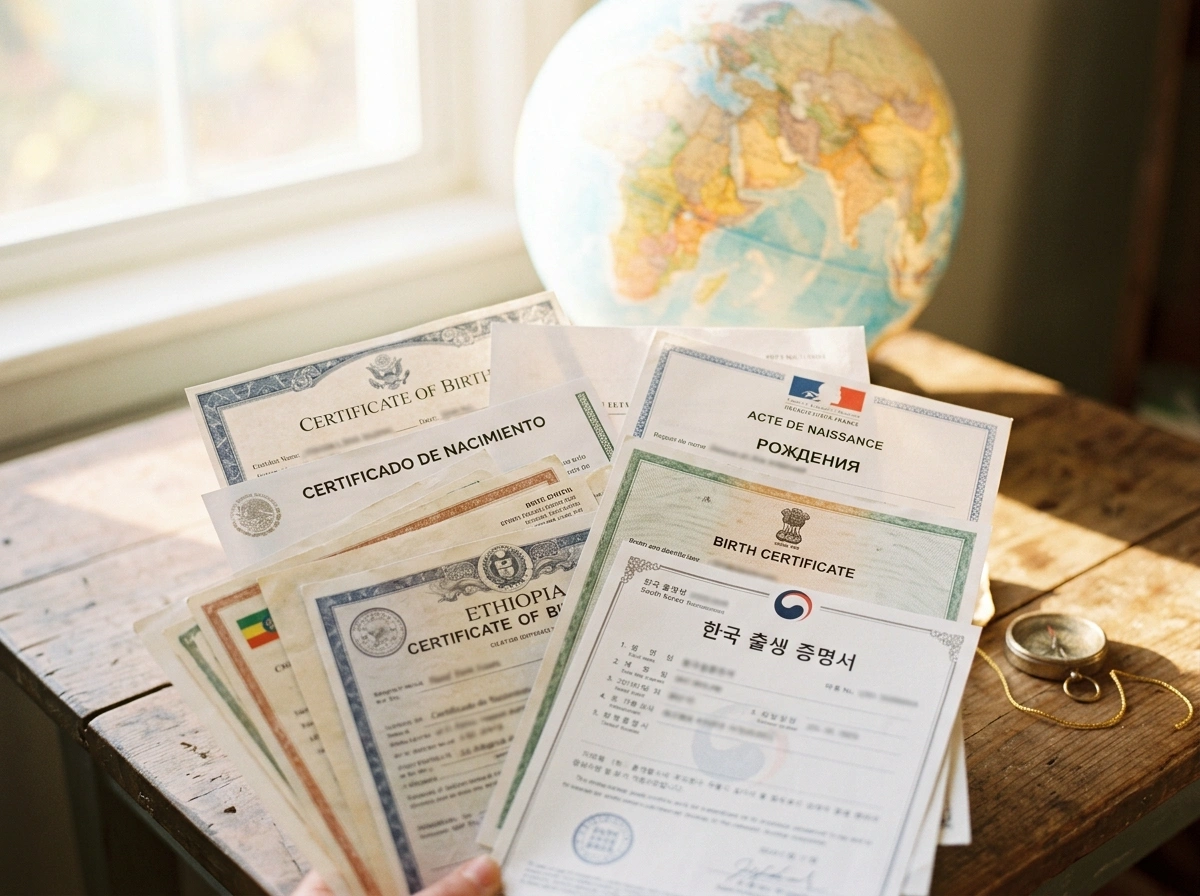
International adoption brings families together across vast geographical and cultural divides. Prospective parents navigate a complex labyrinth of home studies, background checks, and international law to welcome a new child into their home. At the center of this lengthy process is a mountain of paperwork that must be perfectly executed to satisfy multiple government agencies.
Among these required documents, the child’s original vital records hold the most weight. Governments need undeniable proof of a child’s identity, age, and country of origin before granting visas or finalizing legal parental rights. Because these records are issued in the child’s native language, they cannot simply be handed over to immigration authorities in their original form.
Understanding the specific requirements for document translation can save prospective parents months of frustrating delays. A single error on a translated form can cause immigration officials to reject an application entirely. By learning the rules surrounding legal documentation, families can navigate the international adoption process with greater confidence and secure their child’s legal status without unnecessary complications.
The Legal Necessity of Birth Certificates in Adoptions
Every legal proceeding requires a foundation of verifiable facts. In the context of international adoption, a birth certificate serves as the primary document establishing a child’s identity. It provides the legal name, date of birth, place of birth, and biological parentage. Immigration departments, such as the United States Citizenship and Immigration Services (USCIS), rely entirely on this document to verify that the child meets the legal definition of an orphan or is otherwise eligible for adoption under international law.
Without a recognized birth certificate, establishing citizenship for the adopted child becomes nearly impossible. Courts use this document to sever previous legal ties and establish the new adoptive parents as the sole legal guardians. When a child arrives from a foreign country, their vital records must bridge the gap between two entirely different legal systems.
Furthermore, the birth certificate dictates the timeline for the child’s future milestones. It determines school enrollment eligibility, passport applications, and eventual government identification. Because this single piece of paper carries lifelong implications, government agencies scrutinize it heavily during the immigration and adoption process.
Why Professional Translation is Required
When adopting a child from a non-English speaking country, the original documents are useless to local judges and immigration officers unless they can be read clearly. Some families assume that a bilingual friend or relative can quickly translate the text. Immigration authorities strictly prohibit this practice to prevent fraud and ensure absolute accuracy.
Legal documents contain specific terminology that does not always have a direct equivalent in English. A minor mistranslation of a legal term, a misspelled regional location, or an incorrect date format can trigger immediate suspicion from immigration officers. Professional translators understand the nuances of legal and bureaucratic language. They know how to format the translated document so that it mirrors the original, making it easy for officials to cross-reference the two pages.
For these reasons, securing a professional birth certificate translation is a mandatory step. Agencies require an objective, third-party professional to handle the text. This removes any potential conflict of interest and guarantees that the English version is a faithful, exact replica of the foreign original.
The Role of Certified Translations in Legal Recognition
Not all professional translations are treated equally by government bodies. For a document to hold up in an immigration proceeding or family court, it must be accompanied by a certificate of accuracy. A certified translation includes a signed statement from the translator or the translation company affirming that the text is a complete and accurate representation of the original document.
This certification acts as a professional guarantee. It usually includes the translator’s credentials, contact information, and a formal declaration of their fluency in both languages. USCIS and foreign embassies mandate this specific format. Submitting a translated birth certificate without this signed certification guarantees an immediate rejection of the adoption dossier.
Some jurisdictions demand even further authentication. A notarized translation takes the certification a step further by having a notary public witness the translator signing the certificate of accuracy. While USCIS no longer strictly requires notarization for all documents, local family courts finalizing the adoption often do. Understanding exactly what level of certification your specific judge or caseworker requires is critical for keeping the adoption timeline on track.
International adoption is heavily regulated by treaties like the Hague Adoption Convention. This international agreement establishes safeguards to protect children and families involved in intercountry adoptions. Countries participating in the Hague Convention require meticulous documentation to prove that the adoption is ethical and legal.
When dealing with Hague Convention countries, families often encounter the need for an Apostille. An Apostille is a specialized seal that verifies the authenticity of a document for use abroad. If you need to send translated documents back to the child’s country of origin, those translations may need this specific international certification to be recognized by foreign consulates and ministries.
Each country also imposes unique formatting and submission rules. Some nations issue birth certificates that include lengthy narrative descriptions of the birth, rather than a simple standardized form. Other countries update their vital record formats frequently, meaning a document issued five years ago looks completely different from one issued today. Navigating these overlapping domestic and international regulations requires highly specific knowledge of global bureaucratic standards.
Common Challenges in Birth Certificate Translation
Translating historical or foreign vital records presents unique hurdles. One of the most frequent challenges involves handwritten text. In many developing nations or rural provinces, birth certificates are still filled out by hand rather than typed on a computer. Deciphering elaborate, faded, or heavily stylized cursive script requires immense skill and patience from the translator.
Another common issue is the physical condition of the original document. Adopted children sometimes come from regions affected by natural disasters or conflict. Their original birth certificates might be water-damaged, torn, or covered in official stamps that obscure the text. Translators must carefully transcribe everything they can see and appropriately note any sections that are genuinely illegible.
Dialects and regional language variations also complicate the process. A term used on a birth certificate in a specific province of China might differ significantly from standard Mandarin. Name spelling variations between alphabets, such as converting Cyrillic or Arabic characters into the Latin alphabet, must be handled with perfect consistency across all adoption paperwork. A single mismatched letter between a translated birth certificate and a visa application can halt an adoption in its tracks.
Choosing the Right Translation Service
Selecting the right professional service handles much of the stress associated with adoption paperwork. Families should prioritize companies that specialize in legal and immigration documents. A translator experienced in marketing copy will not necessarily understand the stringent demands of USCIS compliance.
Look for services that utilize native speakers and are members of recognized industry organizations, such as the American Translators Association (ATA). Membership in these organizations signals a commitment to professional standards and ethical practices. It is also wise to choose a service that offers support for multiple languages and guarantees acceptance by government agencies.
Speed and confidentiality are equally important factors. Adoption timelines are often rigid, and missing a document submission deadline can delay a family’s travel plans by months. Services that offer expedited turnaround times without sacrificing accuracy provide invaluable peace of mind. Because birth certificates contain highly sensitive personal data, the chosen company must employ strict data security measures to protect the child’s identity.
Taking the Next Step in Your Adoption Journey
Securing an accurate, certified translation of your child’s birth certificate removes a major bureaucratic hurdle from the international adoption process. Proper documentation ensures that legal boundaries are respected and that your child’s identity is officially recognized in their new home country.
As you compile your adoption dossier, gather all original vital records as early as possible. Assess the condition of the documents and consult with your adoption agency regarding specific certification requirements for your state and the child’s country of origin. Partner with a reputable, certified translation service to handle these critical files. By taking a proactive approach to your legal paperwork, you can focus less on administrative stress and more on preparing your home for its newest family member.