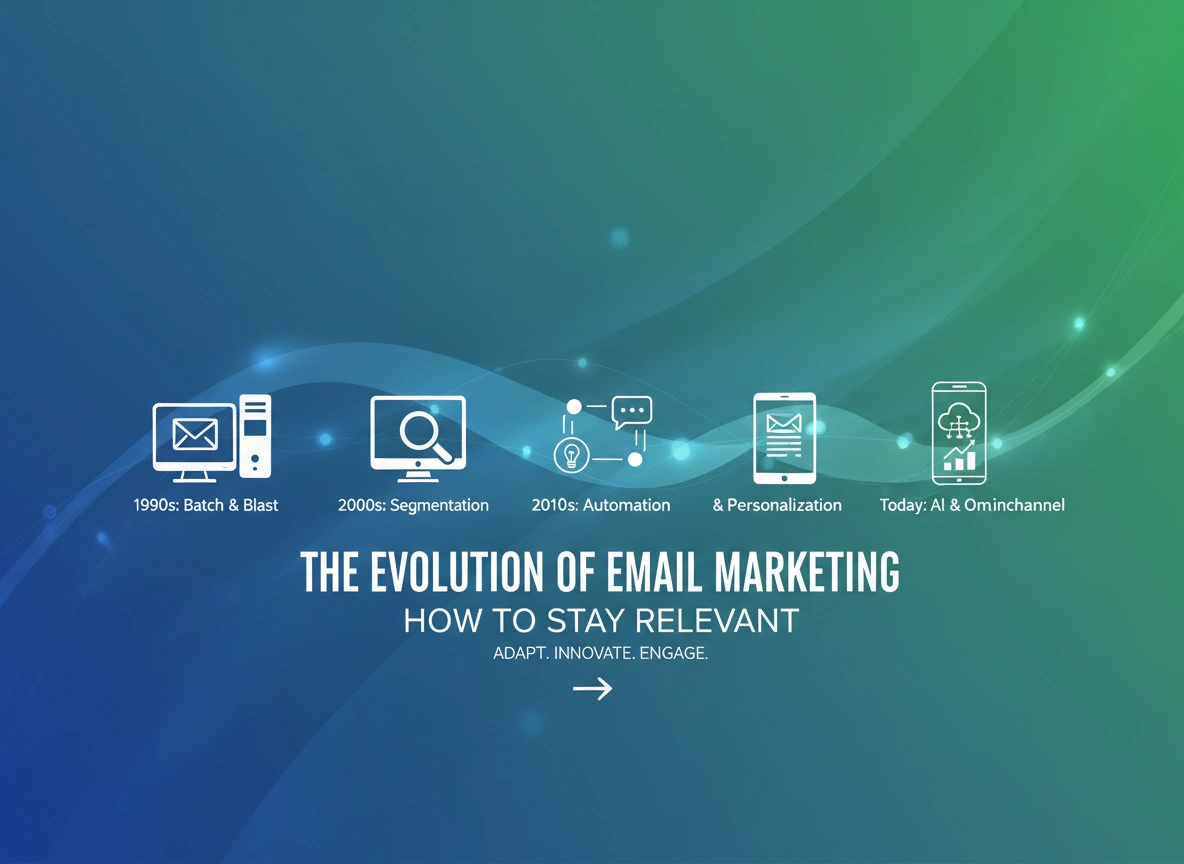
Email marketing has proven its staying power time and again. While newer channels emerge, email remains a cornerstone of digital communication, offering a direct line to customers and prospects. But the strategies that worked a decade, or even a year ago, may not deliver the same results today. Understanding its journey is key to navigating its future.
This article explores the transformation of email marketing from its simple beginnings to its current sophisticated state. We will examine the key milestones that shaped this channel and provide actionable tips to ensure your strategies remain effective and relevant in an ever-changing landscape.
From Simple Text to Dynamic Content: A Brief History
The first mass email campaign was sent in 1978, reaching a few hundred recipients on the ARPANET. It was a simple, text-based message that, despite its rudimentary nature, generated millions in sales. This single event planted the seed for what would become a multi-billion dollar industry.
The Dawn of Commercial Email (1990s)
With the rise of internet service providers like AOL and CompuServe, companies began to see the potential of reaching customers directly in their digital mailboxes. The introduction of HTML email in the late 1990s was a game-changer. Suddenly, marketers could move beyond plain text to include logos, images, and basic formatting. This era was characterized by “batch and blast” tactics, where the same generic message was sent to an entire list. While novel at the time, this approach quickly led to cluttered inboxes and the rise of spam.
The Rise of Regulation and Personalization (2000s)
The early 2000s brought a necessary course correction. Frustrated consumers and overwhelmed email clients led to the implementation of anti-spam legislation, most notably the CAN-SPAM Act of 2003 in the United States. This forced marketers to become more responsible, requiring clear unsubscribe options and truthful subject lines.
This period also saw the emergence of more sophisticated Email Service Providers (ESPs). These platforms gave marketers the tools to segment their lists and personalize messages using basic data like a recipient’s name. This was the beginning of the shift from one-to-many to a more one-to-one style of communication.
The Mobile and Automation Revolution (2010s)
The explosion of smartphones fundamentally changed user behavior. People were no longer tethered to their desktops to check email. This mobile-first reality demanded a new approach to design. Responsive design, which ensures emails look great on any screen size, became a necessity rather than a luxury.
Simultaneously, marketing automation matured. Drip campaigns, welcome series, and abandoned cart reminders became standard practice. Marketers could now create complex, trigger-based journeys that delivered the right message at the right time, based on user behavior. This level of automation allowed for hyper-relevant communication at scale.
Staying Relevant Today: 5 Essential Strategies
The evolution continues. Today, email marketing is driven by data, AI, and a deep focus on the customer experience. To keep your campaigns from feeling like relics of the past, you must adapt to current trends.
1. Embrace Hyper-Personalization
Basic personalization, like using a subscriber’s first name, is no longer enough. Modern consumers expect brands to understand their preferences, purchase history, and browsing behavior.
- Dynamic Content: Use dynamic content blocks to show different offers or products to various segments within the same email campaign. A clothing retailer, for example, can display menswear to male subscribers and womenswear to female subscribers.
- Behavioral Triggers: Go beyond simple welcome and abandoned cart emails. Set up triggers based on website activity, such as viewing a specific product category multiple times or engaging with certain content.
- Predictive Analytics: Leverage AI tools to predict future customer behavior. This can help you recommend products they are likely to buy or identify customers at risk of churning.
2. Prioritize Interactive and Accessible Design
An email is no longer a static message; it’s an experience. Interactivity can dramatically increase engagement and keep subscribers in the inbox longer.
- In-Email Actions: Incorporate elements like carousels, accordions, and surveys that users can interact with directly within the email. This reduces friction by eliminating the need to click through to a landing page.
- Accessibility is Non-Negotiable: Design emails that everyone can read. This includes using high-contrast colors, legible fonts, descriptive alt-text for images, and ensuring your code is compatible with screen readers. Accessible design benefits all users and is a crucial part of inclusive marketing.
3. Build Trust with Transparency and Privacy
Data privacy is a major concern for consumers. Regulations like GDPR and the California Consumer Privacy Act (CCPA) have given users more control over their data, and marketers must respect these boundaries.
- Clear Consent: Use a double opt-in process to confirm that subscribers genuinely want to hear from you. Be transparent about what they are signing up for and how often they will receive emails.
- Preference Centers: Instead of a simple “unsubscribe” link, direct users to a preference center. This allows them to choose the types of content they want to receive and adjust the frequency of emails, which can save a subscriber who might otherwise leave entirely.
4. Integrate Email with Your Broader Martech Stack
Email does not exist in a vacuum. Its true power is unlocked when it works in concert with your other marketing channels and data sources.
- Connect Your CRM: Integrating your email platform with your Customer Relationship Management (CRM) system provides a 360-degree view of the customer. This allows for incredibly targeted segmentation based on the entire customer lifecycle, not just email interactions.
- Omnichannel Journeys: Create seamless experiences that span multiple channels. An email could lead a user to a social media campaign, which in turn directs them to a personalized offer on your website. The data from each touchpoint should inform the next step in the journey.
5. Measure What Matters and Iterate
The “set it and forget it” approach is obsolete. Continuous improvement is driven by a commitment to testing and data analysis.
- Move Beyond Open Rates: While open rates are a useful indicator, they can be misleading due to privacy changes like Apple’s Mail Privacy Protection. Focus on more meaningful metrics like click-through rates, conversion rates, and revenue per email.
- A/B Test Everything: Don’t assume you know what works best. Systematically test subject lines, calls to action, send times, content formats, and email layouts. Use the data from these tests to refine your strategy over time.
The Future of Email: AI, Immersivity, and Value
Looking ahead, the evolution of email marketing shows no signs of slowing down. Artificial intelligence will play an even larger role, from writing subject lines and body copy to optimizing send times for each individual subscriber. We can expect emails to become more immersive, potentially incorporating augmented reality or in-email checkout capabilities.
Ultimately, the core principle of successful email marketing will remain the same: delivering value. Technology and trends will change, but the fundamental need to provide subscribers with relevant, helpful, and engaging content will always be the key to staying in their inbox and building lasting customer relationships.
Please visit this website for more info.