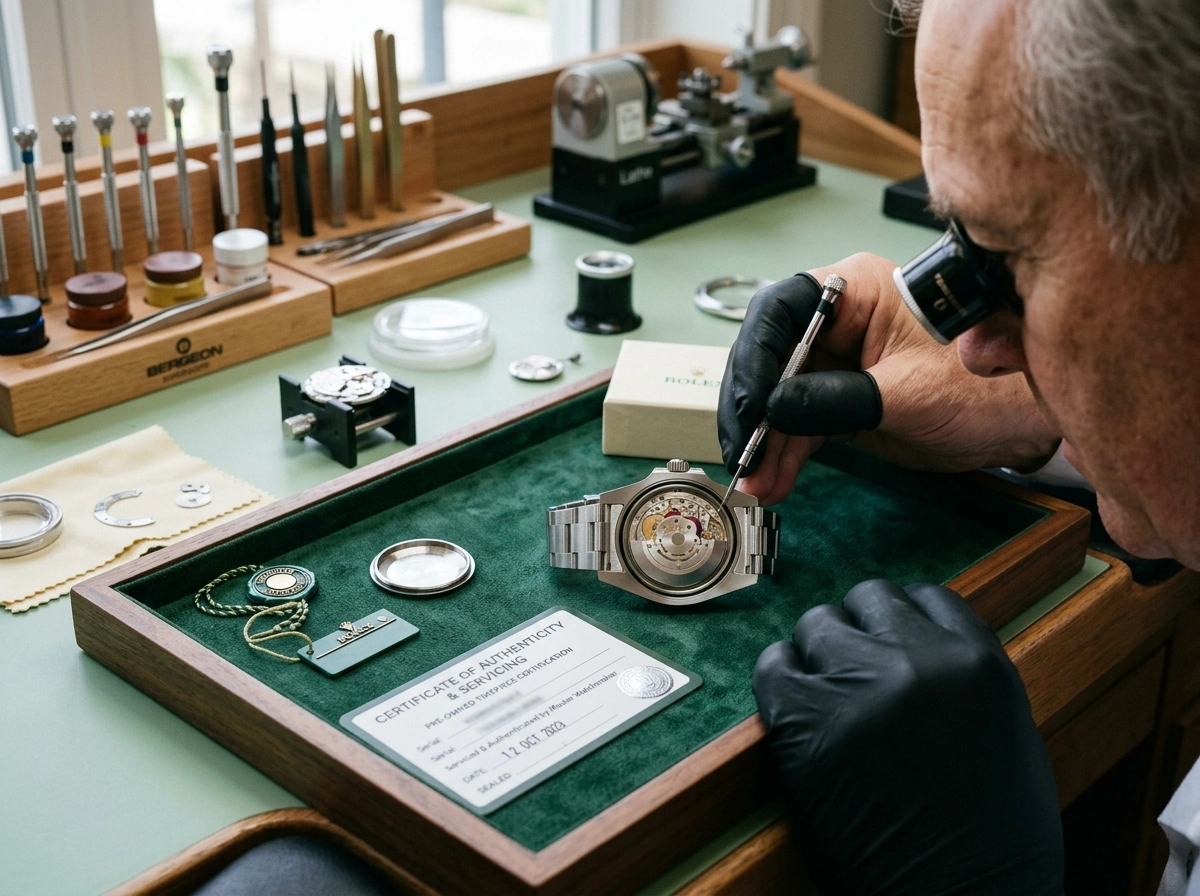
Buying a pre-owned luxury watch can feel exciting and a little nerve-racking at the same time. You want a timepiece that runs beautifully, holds its value, and proves it’s the real deal. That’s where two often-overlooked details come into play: servicing and certification. These aren’t just technical boxes to tick. They protect your investment, build trust, and keep your watch performing for decades.
In this guide, you’ll learn how regular servicing safeguards a watch’s movement and reliability, why certification matters for authenticity and resale, and what smart buyers look for before handing over their money. Let’s break down why these two factors should never be afterthoughts.
Why Servicing Keeps a Pre-Owned Watch Running Strong
A luxury mechanical watch is a tiny machine with hundreds of moving parts. Over time, lubricants dry out, gaskets wear, and small components face stress. Regular servicing keeps everything working the way the manufacturer intended.
Think of it like maintaining a high-performance car. You wouldn’t drive one for years without an oil change. The same logic applies here. A well-serviced watch runs smoothly, keeps accurate time, and avoids the kind of damage that turns a small fix into an expensive repair.
Protecting Movement Performance
The movement is the heart of any timepiece. Inside, jewels, springs, and gears rely on fresh lubrication to reduce friction. When oils break down, parts grind against each other and wear faster than they should.
A proper service includes disassembly, cleaning, re-oiling, and recalibration. This restores accuracy and protects the movement from long-term harm. For a pre-owned watch with unknown history, this step is especially important. You simply don’t know how the previous owner treated it.
Catching Wear and Replacement Parts Early
Routine servicing does more than clean and lubricate. A skilled watchmaker inspects every component for signs of wear, corrosion, or damage. This early detection can save you from a costly breakdown later.
It also reveals whether parts have been swapped out. Some pre-owned watches contain aftermarket or non-original components, which can affect both performance and value. A service report flags these issues so you know exactly what you’re dealing with.
Improving Reliability and Water Resistance
Gaskets and seals degrade over time, even if the watch sits in a drawer. A service replaces these seals and tests water resistance, restoring the protection you’d expect from a quality timepiece.
This matters whether you wear a dive watch in the ocean or a dress watch to the office. Reliable seals keep moisture and dust out, both of which can quietly damage the movement over months and years.
How Servicing Preserves Long-Term Value
A watch with a clear service history is far more attractive to buyers. It signals care, authenticity, and reliability. Two identical models can sell for very different prices based purely on documented maintenance.
Here’s a common mistake: owners skip servicing to save money, then watch their resale value drop. When you eventually sell, buyers ask about service records. If you can’t provide them, you’ll likely accept a lower offer.
Keep your receipts and service reports in one place. These documents prove your watch was maintained by professionals and that its movement remains in original, working condition. That paper trail becomes part of the watch’s story and its worth.
Why Certification Builds Buyer Confidence
If servicing protects performance, certification protects trust. In the pre-owned market, authenticity is everything. A certificate from a reputable source confirms that a watch is genuine, accurately described, and worth what you’re paying.
The luxury watch world has its share of fakes and altered pieces. Some replicas are so convincing that even seasoned collectors struggle to spot them. You’ll find detailed discussions about high-quality reproductions like super clone rolex watches, which highlights exactly why certification has become so valuable for serious buyers.
Confirming Authenticity
Certification involves expert inspection of the case, dial, movement, serial numbers, and components. Specialists compare these details against manufacturer records to confirm the watch is authentic and unaltered.
This process catches counterfeit parts, swapped dials, and “Frankenwatches” assembled from mismatched pieces. For a buyer, a certificate offers peace of mind that you’re getting precisely what the seller promised.
Supporting Transparency in the Market
A trustworthy pre-owned market depends on honest information. Certification creates a shared standard that both buyers and sellers can rely on. It removes guesswork and reduces disputes.
When a watch comes certified, you know its condition, originality, and history have been independently verified. That transparency benefits everyone and raises the credibility of the entire pre-owned trade.
Boosting Resale Value
Just like service records, certification increases what your watch can fetch on resale. Certified timepieces command higher prices because they carry less risk for the next buyer.
If you ever decide to sell, a certificate makes your listing stand out. Buyers pay a premium for confidence, and certification delivers exactly that.
What Smart Buyers Should Check Before Purchasing
Before you buy any pre-owned luxury watch, run through this quick checklist. It protects your money and your peace of mind.
- Ask for service history: Request receipts and reports showing recent professional maintenance.
- Verify certification: Confirm the watch comes with documentation from a credible authority or dealer.
- Inspect for original parts: Ask whether any components have been replaced and with what.
- Check water resistance: Make sure seals have been tested if the model is water-resistant.
- Match serial numbers: Confirm that case and movement numbers align with manufacturer records.
If a seller hesitates on any of these points, treat it as a warning sign. Reputable sellers welcome these questions and provide clear answers.
Common Mistakes to Avoid
Many buyers focus only on appearance and price. A watch can look flawless on the outside while hiding worn internals or non-original parts. Don’t judge by looks alone.
Another mistake is assuming all certifications are equal. Some come from independent experts with strong reputations, while others mean very little. Always check who issued the certificate and whether they’re trusted in the industry.
Finally, never skip your own servicing once you own the watch. Maintenance isn’t a one-time event. Most mechanical watches benefit from professional servicing every three to five years, depending on the model and how often you wear it.
Conclusion: Protect Your Investment with Care and Proof
Servicing and certification work together to safeguard your pre-owned timepiece. Servicing keeps the movement accurate, reliable, and ready to last for generations. Certification proves authenticity, builds buyer trust, and strengthens resale value. Skip either one, and you risk both performance problems and financial loss.
Here’s what to do next. If you own a luxury watch, schedule a professional service and keep every record. If you’re buying, insist on documented maintenance and trustworthy certification before you commit. These simple steps turn a risky purchase into a confident, lasting investment.
A common next question: How often should you service a pre-owned watch? For most mechanical models, plan on a full service every three to five years, and sooner if you notice timekeeping issues or moisture inside the case.