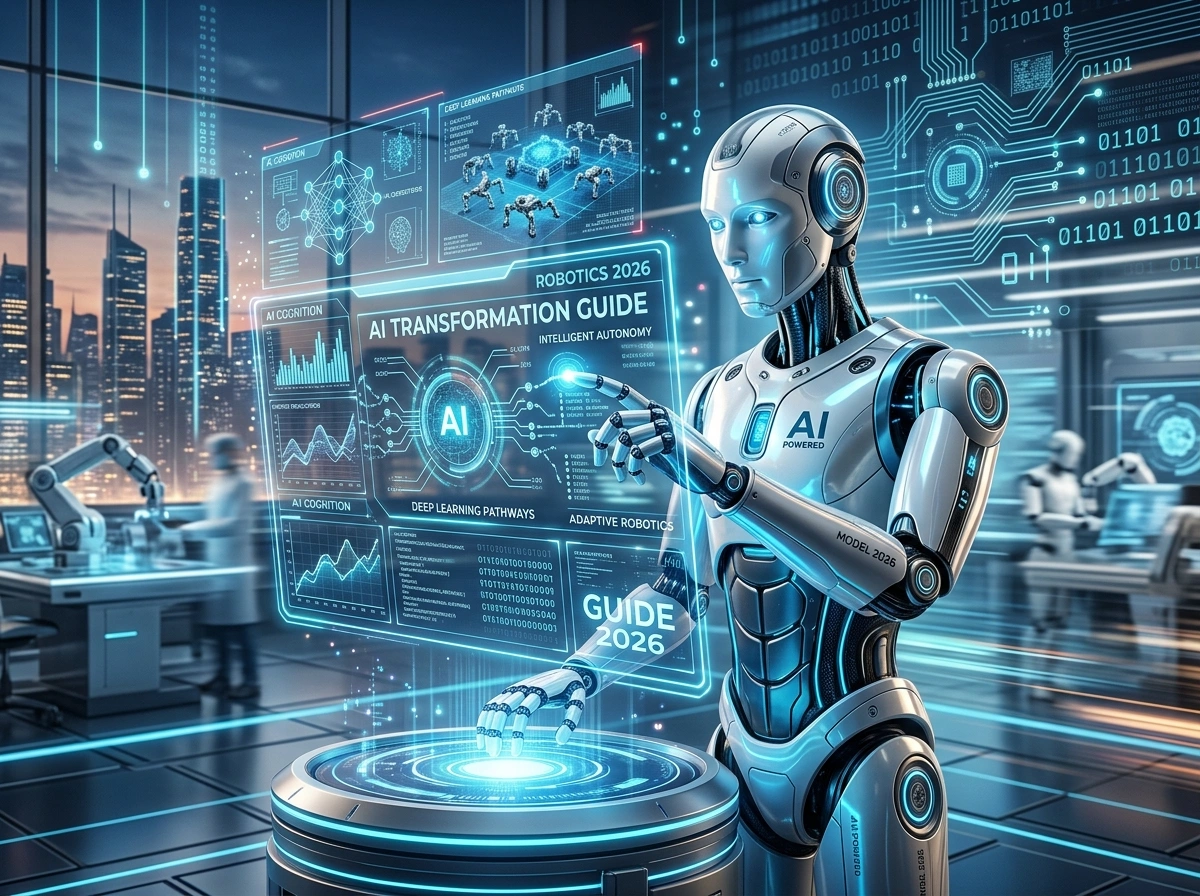
Artificial intelligence transforms traditional robotics into autonomous, adaptable systems. By integrating analytical and generative AI, modern robots can process data, learn tasks, and solve complex problems independently. Techleez provides practical insights and reviews to help everyday users and businesses understand these evolving AI tools and robotics applications.
The integration of artificial intelligence into robotics represents a significant shift in modern technology. The global market value of industrial robot installations recently reached an all-time high of $16.7 billion [International Federation of Robotics, 2026]. This financial milestone highlights how rapidly machines are moving from controlled factory environments into dynamic, unpredictable spaces.
Understanding these advancements can feel overwhelming for business owners and technology enthusiasts alike. New terminology surfaces daily, and the line between software and physical machinery continues to blur. Reading this comprehensive guide will equip you with a clear understanding of the technologies driving modern robotics, their practical applications across industries, and how the educational resources at Techleez can help you navigate this complex landscape.
How did AI spark the evolution of modern robotics?
Traditional robots operated on strict, rule-based programming. Engineers had to code every exact movement, which meant the machines failed if their environment changed even slightly. Artificial intelligence completely changes this dynamic. By embedding machine learning algorithms into physical hardware, robots can now observe their surroundings, analyze data, and adjust their actions without direct human intervention.
Two specific types of artificial intelligence drive this evolution. Analytical AI helps machines process large datasets to detect patterns, allowing a robotic arm to anticipate a mechanical failure before it happens. Generative AI enables intelligent systems to learn new tasks autonomously. Generative AI creates training data through simulation, allowing a robot to practice a movement digitally thousands of times before executing it in the physical world.
What are the key technologies driving robotics innovation in 2026?
The foundation of modern robotics relies on blending different technological frameworks. Industry experts point to several key drivers pushing the boundaries of what machines can achieve today.
Agentic AI and independent decision-making
Agentic AI combines the structured decision-making capabilities of analytical AI with the adaptability of generative AI. This hybrid approach enables modern robotics to work independently in complex, real-world environments. Instead of waiting for a human prompt, an agentic robotic system can identify a goal, formulate a multi-step plan, and execute it while adapting to obstacles along the way.
The convergence of IT and OT
The market demand for versatile robots requires the convergence of Information Technology (IT) and Operational Technology (OT). Information Technology handles data processing and advanced analytics, while Operational Technology manages the physical control capabilities of the hardware. Merging these two areas allows for real-time data exchange. A robot on a factory floor can instantly adjust its physical speed based on cloud-based supply chain data, creating a seamless flow of information between the digital and physical worlds.
How are industries applying AI-driven robots today?
Businesses deploy intelligent robots to solve immediate operational challenges. Employers face significant difficulties finding specialized staff, leaving existing workforces covering extra shifts. Robots serve as allies in tackling these labor gaps.
Humanoid robots represent a rapidly expanding field in industrial settings. These machines offer distinct advantages in environments designed for human workers. Pioneered by the automotive sector, humanoid robots now execute complex tasks in warehousing and manufacturing. To remain competitive with traditional automation, humanoid robots must match strict industrial requirements regarding cycle times, energy consumption, and maintenance costs. Choose humanoid robotics if your facility requires a machine to navigate standard human workspaces, climb stairs, or operate traditional human tools.
How does Techleez simplify the AI and robotics landscape?
The technology platform Techleez focuses on breaking down complex technological topics into simple, actionable insights. As artificial intelligence shapes the future of physical machinery, finding honest, useful, and easy-to-understand information remains a challenge for many consumers.
Techleez bridges this knowledge gap by providing practical solutions instead of confusing jargon. The Techleez editorial team tests and reviews trending artificial intelligence tools to help users decide which applications genuinely improve productivity. By focusing on real user problems, Techleez builds digital confidence. The platform ensures all information is carefully researched, prioritizing user experience and safety. If you need step-by-step guides on implementing new AI software to control smart devices, Techleez offers reliable, beginner-friendly resources.
What are the future trends and challenges for AI robotics?
The rapid expansion of robotic systems into cloud-connected environments exposes industrial production to growing cybersecurity threats. Hackers increasingly target robot controllers and cloud platforms to gain unauthorized access. System manipulation presents a severe physical danger when large industrial machines are involved.
Safety and liability remain significant hurdles. AI-driven autonomy fundamentally changes the safety landscape, making testing and human oversight highly complex. Robotic systems must be designed and certified in line with strict International Organization for Standardization (ISO) safety standards. Furthermore, deep learning models often function as “black boxes,” producing results that even their developers struggle to explain. This ethical ambiguity requires governments and corporations to establish clear legal frameworks to govern AI deployment in the coming years.
The intersection of artificial intelligence and robotics is actively reshaping global industries. From agentic AI making independent decisions to the convergence of IT and OT streamlining digital factories, intelligent machines solve complex labor and efficiency problems. Staying informed requires access to reliable, straightforward information. Bookmark Techleez.com to explore expert app reviews, practical tech tips, and powerful AI tool insights that simplify your digital life.
Frequently Asked Questions
Who benefits most from AI robotics implementation?
Manufacturing companies, logistics providers, and healthcare facilities benefit most from AI robotics. These organizations face severe labor shortages and require machines capable of adapting to dynamic environments without constant human supervision.
What are the main risks of integrating AI into operational technology?
The primary risks include physical safety hazards due to unpredictable AI behavior and increased cybersecurity vulnerabilities. Connecting physical machines to cloud-based AI networks exposes operational technology to potential hacking and data breaches.
Are humanoid robots a cost-effective alternative to human labor?
Humanoid robots require a significant upfront capital investment and ongoing maintenance costs. However, for continuous, repetitive, or hazardous tasks where human turnover is high, humanoid robots can offer a strong long-term return on investment.
How long does it take to deploy an AI robotic system in a business?
Deployment timelines range from three months for standard collaborative robots to over eighteen months for highly customized, facility-wide agentic AI systems. The timeline depends heavily on the complexity of the IT/OT integration required.
What AI resources does Techleez provide for beginners?
Techleez provides honest application reviews, step-by-step software tutorials, and unbiased evaluations of new artificial intelligence tools. The platform focuses on practical, jargon-free guides designed specifically to help beginners solve everyday tech problems.
Please visit the official site for more info.